Could harmful algal blooms pose greater risks to human health than current testing methods can detect?
A University of Windsor research team is using human cells and miniature laboratory-grown models of organs to investigate whether existing approaches to measuring algal toxins capture their potential health effects.
The findings could eventually inform how drinking water and recreational water safety are assessed, with implications for communities across Canada.
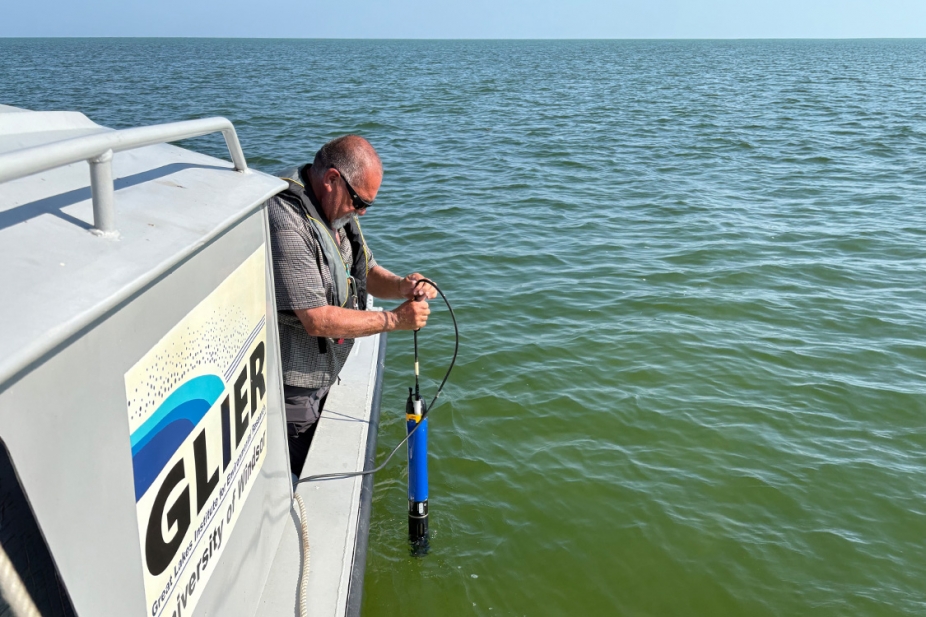
Led by Dr. Mike McKay, director of UWindsor's Great Lakes Institute for Environmental Research (GLIER) and postdoctoral researcher Dr. Elizaveta (Liza) Gerasimova, the project combines environmental science and biomedical research to examine how mixtures of toxins produced by cyanobacteria – commonly known as blue-green algae – may affect human cells and tissues.
The research received a $20,000 Igniting Discovery Grant from WE-SPARK Health Institute, supported by UWindsor's Office of the Vice-President, Research and Innovation and Faculty of Science.
For McKay, who has studied harmful algal blooms for decades, the importance of understanding these toxins became particularly clear during a drinking water emergency in nearby Toledo, Ohio, in 2014.
That August, toxins associated with a harmful algal bloom in Lake Erie prompted a three-day drinking water advisory affecting approximately 500,000 people.
The crisis highlighted an important question for researchers: How accurately can scientists assess the health risks associated with harmful algal blooms?
Existing guidelines rely heavily on toxicological research involving animals and focus on a handful of specific compounds. However, harmful algal blooms produce complex mixtures of potentially harmful substances, many of which remain poorly understood.
“By looking at human cell platforms, cell lines, or organoids, will that provide a more realistic assessment of actual risk?” asks McKay.
Using human cells to study toxic algae
Gerasimova brings expertise in human cell research to the project.
She recently earned her PhD in Germany, studying interactions between the brain and immune system in conditions including Parkinson's disease and inflammatory bowel disease. Her work includes developing human stem cells into neurons and three-dimensional structures called organoids, which mimic certain features of human organs.
At UWindsor, she is applying that expertise to questions about environmental health.
Unlike conventional cell cultures grown in flat layers, organoids can contain multiple interacting cell types organized in three dimensions. These models allow researchers to examine how exposure to toxins may affect biological processes such as inflammation, immune responses and cellular damage.
The models cannot reproduce every function of a complete human organ, but they offer a different and potentially more informative way to investigate how toxins affect human tissues.
Gerasimova says combining these laboratory techniques with water samples from the Great Lakes could provide a clearer picture of how naturally occurring toxin mixtures affect human cells.
“Previous studies have exposed human cells to individual commercially obtained toxins,” she says.
“This will examine realistic mixtures found in lake water. We are bridging the environmental aspect and the human biology aspect,” she says.
That distinction could prove significant.
Canadian drinking water guidelines focus on microcystins, a group of toxins associated with harmful algal blooms. However, blooms in Lake Erie and Lake St. Clair may contain numerous other compounds whose combined effects are not fully understood.
McKay questions whether measuring a limited group of compounds provides an adequate picture of the overall danger.
“Should we be including more molecules in those guidelines? Are we using the correct one right now?” he asks.
The team hopes to determine whether different toxin mixtures produce different biological effects, whether certain tissues are more vulnerable and whether current testing methods overlook potentially important risks.
The researchers are testing whether measuring routinely monitored toxins is enough to predict the biological effects of more complex mixtures found in lake water.
Exploring other routes of exposure
The project may also help researchers better understand the risks associated with different types of exposure.
Drinking contaminated water and swimming in affected lakes are familiar concerns. But McKay points to emerging research suggesting that airborne exposure may also warrant greater attention.
As waves break along shorelines, cyanobacteria and the compounds they produce can enter the air in tiny droplets, creating a potential exposure pathway for people near affected waters.
Understanding how these substances affect human cells could help inform future research into exposure beyond drinking water.
Although cyanobacteria occur naturally, excess nutrients such as nitrogen and phosphorus from agricultural runoff can fuel their growth, contributing to the harmful blooms experienced in Lake Erie and Lake St. Clair.
Harmful algal blooms can also affect wildlife and aquatic ecosystems. The research reflects a broader One Health approach, which recognizes the connections between human, animal and environmental health.
From Windsor to national impact
The project brings together researchers from across UWindsor, including biomedical scientists Dr. Lisa Porter, Dr. Munir Rahim and Dr. Phillip Karpowicz, whose expertise and laboratory facilities will support the work.
McKay says the WE-SPARK grant will provide early funding to establish the experimental approach, generate preliminary findings and support future applications for larger research grants.
Developing and maintaining the human cell models requires specialized resources, making the initial funding especially valuable.
For Gerasimova, who is supported through the Walter Benjamin Programme by the Deutsche Forschungsgemeinschaft (DFG, German Research Foundation), the project offers an opportunity to apply her biomedical expertise to understanding environmental exposures that may contribute to health problems.
McKay sees even broader possibilities.
By combining GLIER's Great Lakes research expertise with UWindsor's biomedical capabilities, the team hopes to develop a testing approach that could eventually help Health Canada better assess the risks associated with harmful algal blooms.
The goal is not to challenge existing water safety standards without evidence, but to investigate whether additional testing methods could provide a more complete understanding of potential health risks.
For communities that depend on freshwater for drinking, recreation and livelihoods, that knowledge could help strengthen public health protection well beyond the Great Lakes.
By John-Paul Bonadonna
Courtesy: https://www.uwindsor.ca/news/2026-10-28/beyond-bloom-uwindsor-researchers-investigate-hidden-health-risks-toxic-algae