Apr 22, 2026
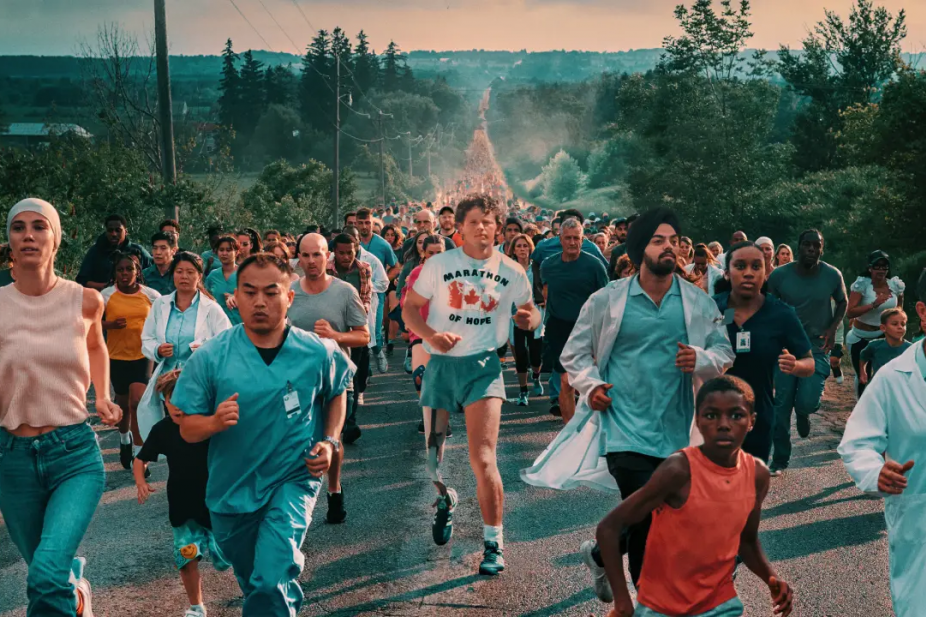
Terry Fox and his Marathon of Hope brought Canadians together to help find a cure for cancer. His legacy continues through partnerships spurred on by the Marathon of Hope Cancer Centres Network, which includes WE-SPARK Health Institute. (Graphic courtesy of Marathon of Hope Cancer Centres Network)
In cancer research labs and hospitals, a powerful transformation is reshaping how the disease is understood, studied and ultimately, treated.
At the centre of this shift is precision oncology, an approach that moves beyond one-size-fits-all care to deliver treatments tailored to each individual patient. It represents one of the most promising advances in cancer care today.
By analyzing a patient’s genetic profile alongside clinical data, researchers and clinicians can better understand how a cancer behaves and more importantly, how it can be treated most effectively.
For patients, this means therapies that are more targeted, more personalized and potentially, more successful.
In Windsor-Essex, WE-SPARK Health Institute is playing a pivotal role in supporting a broad portfolio of research that advances precision oncology – from discovery to implementation – with the goal of improving outcomes for patients.
“It doesn’t happen in isolation,” explains Dr. Dora Cavallo-Medved, interim director of WE-SPARK.
“It requires collaboration between scientists, clinicians, patients and community, as well as access to funding, technology and data. That’s what WE-SPARK is helping to build here in Windsor-Essex.”
At its core, WE-SPARK’s impact lies in its ability to unite researchers, clinicians and community partners across multiple institutions and to support research success.
With partners that include the University of Windsor, Windsor Regional Hospital, Hotel Dieu Grace Healthcare, Erie Shores HealthCare and St. Clair College, the institute has created the ecosystem needed to support complex, data-driven cancer research, the scope and types of which have traditionally been attributed to larger metropolitan areas and medical universities.
Connecting Windsor to a national network
WE-SPARK’s local efforts in personalized medicine have been amplified through the Marathon of Hope Cancer Centres Network (MOHCNN), a pan-Canadian initiative led by the Terry Fox Research Institute and the Terry Fox Foundation, with support from the federal government and partner institutions across the country.
This network is designed to accelerate the adoption of precision oncology by connecting hospitals, universities and research centres into a unified system.
Together, they are building a national database that combines genomic and clinical data – an essential tool for identifying patterns, improving diagnoses and developing personalized treatments.
Windsor’s inclusion in this network is significant. The partnership between the University of Windsor and Windsor Regional Hospital represents one of the first community hospital-based sites in Canada to participate.
A flagship local project of the network – co-led by WE-SPARK core members Dr. Lisa Porter, University of Windsor Biomedical Sciences professor and founding director of WE-SPARK, and Dr. Caroline Hamm, Windsor Regional Hospital medical oncologist – focuses on postpartum breast cancer, a poorly understood form of breast cancer that affects women within a window of time after childbirth. The duo relies on a large team of research associates, staff at the breast screening clinic, surgeons, oncologists and pathologists to identify eligible patients, collect genomic and clinical data. This data is added to a growing national network motivated to close critical knowledge gaps for understudied cancers.
“Access to extended molecular profiling is needed for many cancers in today's world as it allows us to identify new and targeted treatments and clinical trials that can extend people's lives,” says Hamm.
“The MOHCCN is working to offer this to more patients across Canada and being the first community hospital in Canada to join the network allows Windsor to participate in this pan-Canadian study and offer these new treatment options to our local patients.”
“This project is helping us understand not just how these cancers are different, but why they are different at a molecular level, and how that knowledge can guide more effective, personalized treatment strategies,” explains Porter.
“Understanding inherited risk means we are not only treating cancer, but we are also creating opportunities to prevent it or detect it earlier in family members who may otherwise never know they are at risk.”
Equally important is the integration of patients into the research process itself. Through both WE-SPARK initiatives and the national network, individuals with lived experience are actively involved in shaping research priorities and approaches.
“Patients are not only participants in this work, but they are partners too. Their experiences are shaping the questions we ask and the direction of the research itself,” says Jillian Calandra, translational research associate, WE-SPARK Health Institute and clinical research associate, MOHCCN.
“Incorporating patient voices ensures that our research remains grounded in what matters most: improving outcomes and quality of life for those directly affected.”
Turning local investment into national impact
The growth of precision oncology in Windsor-Essex has also been fueled by strong community support. Through WE-SPARK’s funding model, local investments are directly enabling research that contributes to national progress.
Over the past five years, WE-SPARK has distributed more than $2.3 million in health research funding, which has supported its members in securing over $6 million in additional external support. These investments have strengthened the region’s research capacity, making it possible to participate in initiatives like MOHCCN.
Community organizations including the Cancer Research Collaboration Fund, Windsor Cancer Centre Foundation and Transition to Betterness have also played a critical role by providing matching funds required for Windsor’s participation in the network.
This collaborative approach ensures that progress in precision oncology is not confined to major urban centres but extends to communities across Canada.
“What’s remarkable is that this work is happening here in Windsor-Essex while contributing to a national network. It shows that community-based research programs can play a leading role in advancing precision oncology across Canada,” says Dr. Gina Bulcke, Windsor Regional Hospital office of research director.
“This project ensures that patients in our region have access to the same cutting-edge research and insights as those in larger centres,” states Dr. Bre-Anne Fifield, research associate, University of Windsor and coordinator, MOHCCN Windsor site.
For patients in Windsor-Essex, this means access to the same innovative approaches being developed in larger centres without having to leave their community.
Local leadership in national education platform
As part of its commitment to education and engagement, WE-SPARK is helping lead a national conversation about precision oncology through an upcoming virtual event: “Precision Oncology: From Hope to Impact”, Sunday, April 26 at 1 p.m.
Organized by the Marathon of Hope Cancer Centres Network’s Patient Working Group and co-led by Cavallo-Medved, the event is designed by patients – for patients – along with caregivers, families and anyone interested in learning more.
The virtual forum will feature a panel of patients, clinicians and researchers from across Canada, including Dr. Hamm as a panelist.
“Terry Fox’s vision was always about bringing Canadians together to find a cure for cancer. What we’re doing now through precision oncology and national collaborations is a continuation of that dream,” states Cavallo-Medved.
“It’s about ensuring that every patient – no matter where they live – has access to the most advanced, personalized care possible. We want people to feel informed, empowered and connected.”
Attendees will also have the opportunity to ask questions and share their experiences, contributing to a broader dialogue about the future of cancer care in Canada.
Advancing research that impacts today’s patients
One of the most important contributions this work is making to precision oncology is ensuring that research reflects the diversity of real-world patients.
While precision oncology is still evolving, its impact is already being felt. Patients in certain settings are beginning to receive treatments informed by their genetic profiles, and clinical trials are expanding access to these approaches.
However, scaling this model nationwide requires time, infrastructure and continued collaboration.
“Building a system where every patient can benefit from precision oncology doesn’t happen overnight,” says Cavallo-Medved.
“But by being part of this network, WE-SPARK is helping to accelerate that process and ensuring Windsor is not left behind.”
To learn more about precision oncology and to register for the “From Hope to Impact” virtual event, use this link.
By John-Paul Bonadonna
Courtesy: https://www.uwindsor.ca/news/2026-04-21/precision-oncology-action-how-we-spark-transforming-local-cancer-research