Dec 03, 2025
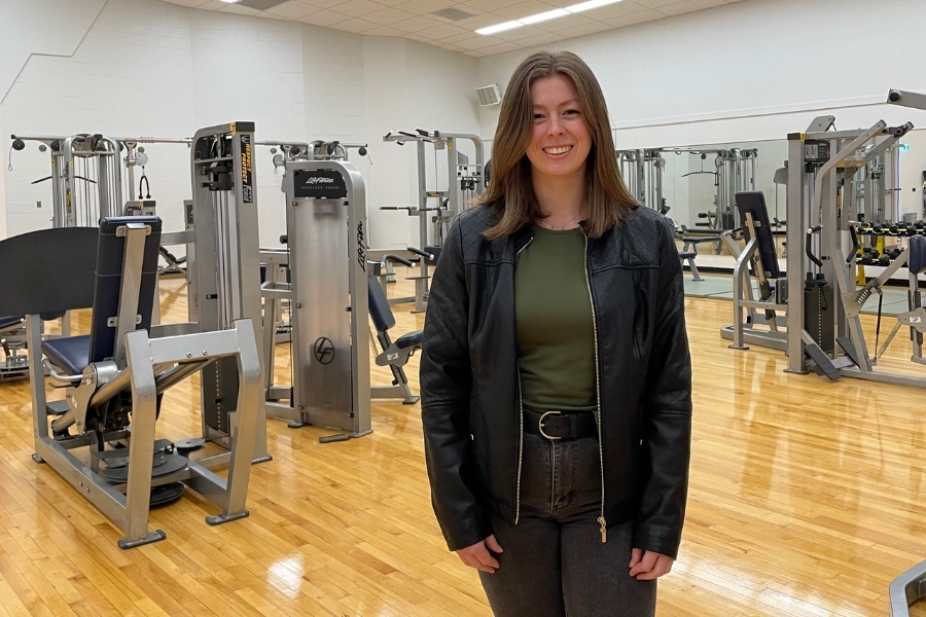
Recent Kinesiology graduate Dr. Fallon Mitchell has released a guide to help fitness centres improve accessibility
(FILE/University of Windsor)
While the benefits of exercise on mental, physical and social well-being are widely known, accessing inclusive and functional spaces to engage in exercise can be a challenge for people with a disability.
In her doctoral research, recent UWindsor Kinesiology graduate and Vanier scholar Dr. Fallon Mitchell (PhD ’25) explored the accessibility—or the lack thereof—of fitness centres.
“Gyms are a common place where people go to be physically active, and they accommodate a wide range of training styles and preferences—for example strength training, yoga, mobility and cardio—which can make them appealing to people with diverse goals and skills,” explains Mitchell.
“However, gyms are rarely designed with accessibility and inclusion in mind. Participants in my studies described gyms as intimidating and often exclusionary for people with a disability.”
Gyms and fitness centres can present a variety of barriers: equipment may be inaccessible, pathways too narrow to navigate, music too loud, signage lacking or the culture unwelcoming.
To address these barriers, Mitchell’s research culminated in the creation of a guide, Accessible by Design: A Guide for Inclusive Fitness Centres, to start the conversation about making fitness spaces more meaningfully inclusive of people with a disability.
“It is intended to be a practical tool for fitness providers, staff, policymakers and gym users who want to make meaningful change,” says Mitchell.
Mitchell’s work in disability began in the third year of her undergraduate studies as part of professor of Kinesiology Dr. Paula van Wyk’s Adapted Physical Activity course.
“She taught about the social model of disability and the role the environment played in enabling or restricting people's participation in sport and exercise,” Mitchell says.
This paradigm shift toward a social model rather than a medical one is critical to true access, as van Wyk explains.
“Historically, a medical model approach viewed disability or impairment as something that needed to be fixed or hidden, sometimes even leading to the exclusion of the person altogether,” she says.
“Physical activity and exercise were often discouraged as they were believed to aggravate someone’s condition. While progress has been made, there is still work to do.”
Mitchell was intrigued by van Wyk’s course and began connecting this perspective to her volunteer work.
“I started to notice and hear more and more about how people with a disability were limited by environmental factors, like access to buildings, inadequate equipment, discriminatory policies or stigmatizing attitudes,” Mitchell says.
As Mitchell was a youth athlete and avid exerciser, she recognized the myriad benefits of physical activity and sport and was inspired to focus her dissertation project on improving accessibility in fitness facilities.
“If health is a right of all people, and physical activity is beneficial for health, then everyone should be provided the opportunity to participate,” she says.
Developed from workshops involving people with a disability, caregivers, and fitness professionals, the resulting Accessible by Design guide offers strategies organized into four main areas:
- Designing communications and spaces — from accessible signage and layouts to sensory-friendly environments.
- Creating an inclusive culture — promoting belonging through staff training, representation, and supportive behaviours.
- Building inclusive programs — offering adaptive exercise options and resources to help users learn, participate, and succeed.
- Transforming organizations — embedding accessibility in policies, leadership, and long-term planning.
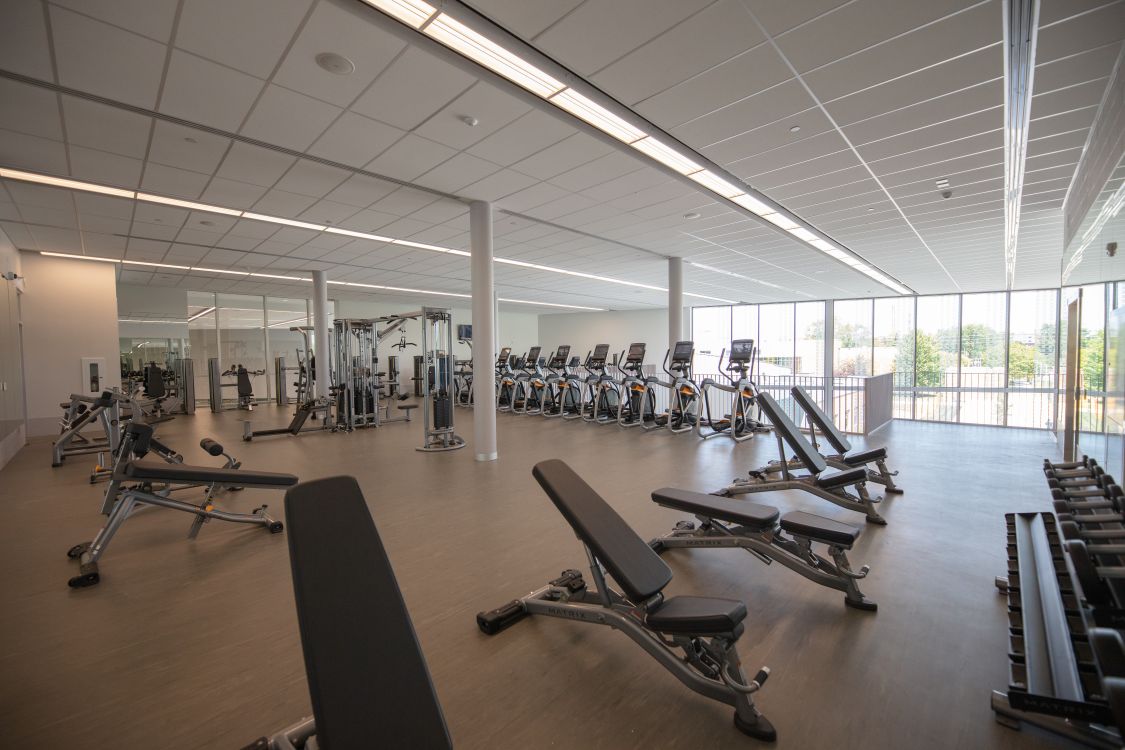
Principles of Universal Design were applied in Mitchell’s dissertation study to examine their effect on fitness centre accessibility
(FILE/University of Windsor)
Recommendations within the guide embrace universal design (UD) principles to create environments that are usable, respectful and welcoming for all.
UD, which originated in the 1980s in the architectural field, describes environments designed to be usable by all people without relying on specific modifications or adaptations.
The use of UD principles in gym settings is also central to a recent article stemming from Mitchell’s dissertation research published in the Canadian Journal of Disability Studies.
Co-authored with van Wyk, who supervised Mitchell’s doctoral studies, alongside professor emerita in the School of Creative Arts and UD expert Veronika Mogyorody and professors of Kinesiology Sara Scharoun Benson and Sean Horton, the article compares user experience in adapted versus conventional gym settings.
In the study, 39 participants performed tasks in an adapted and a traditional gym, with the amount of time taken to complete each task recorded and usability and user experience questionnaires completed after the fact.
As opposed to the two-level conventional gym, the adapted gym was on a single level and included modifications such as clear signage and Braille, floor plans with audio and route descriptions, music turned off, clear access routes and multiple heights of storage shelving.
Regardless of ability status, the adapted gym came out on top in terms of faster completion of tasks and better user experience and usability, suggesting that UD in gym settings improves inclusivity for all users.
“UD offers a proactive design solution that integrates the needs of diverse users from the outset of planning and design to create spaces that are accessible, welcoming and inclusive for all,” says Mitchell.
However, she also cautions that accessibility and UD are not a one-time checklist but rather an ongoing process.
“True inclusion requires continuous improvement and collaboration with people who have lived experience,” she says.
van Wyk echoes this, emphasizing the work that still needs to be done.
“Efforts like Dr. Mitchell’s dissertation represent important steps toward helping facilities design spaces that are universally accessible and foster inclusion, community and belonging,” she says.
“Everyone should have the right to choose to be physically active in gym spaces, yet many barriers still limit people’s ability to make that choice freely.”
Mitchell’s current research as a postdoctoral fellow at the University of Alberta continues her investigation into physical activity behaviours, looking at activity and health outcomes among pregnant people with a disability.
“Findings from my postdoctoral work will contribute evidence to guide exercise among pregnant people with a disability and develop effective health interventions,” she says.
“Ultimately, the aim of my research is to advance knowledge of physical activity among underrepresented populations and reduce health inequities for people experiencing disability.”
Accessible by Design may be accessed online or by emailing Dr. Mitchell at fallon1@ualberta.ca.
Courtesy:
Kate Hargreaves
https://www.uwindsor.ca/news/2025-12-01/doctoral-study-gives-rise-guide-gym-accessibility