Apr 16, 2026

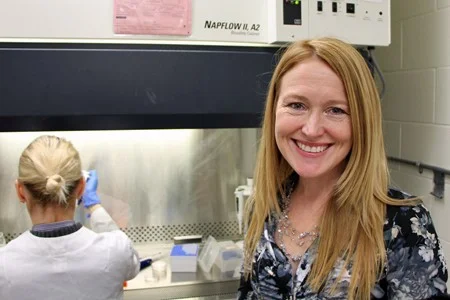
Dr. Lisa Porter is a Canadian cancer researcher and biomedical scientist whose innovative research is transforming our knowledge of normal aging and cancer. As a distinguished professor at the University of Windsor and the founding director of WE-SPARK Health Institute, she has fostered innovative collaborations between researchers, healthcare providers, and community partners, turning Windsor-Essex into a hub for cutting-edge health research. In this interview, Dr. Porter discusses her latest work on brain cancer, the challenges with treating aggressive cancers like glioblastoma, and her influential role in health research across Canada.
Q: Your recent research on Spy1 has received a lot of attention. Can you tell us more about this protein and its significance?
Dr. Lisa Porter: Spy1 is a protein found in a small population of cells in the adult brain, neural stem cells, and is critical to the proper functioning of our memory and learning. Early evidence suggests that it can also support normal repair mechanisms following damage. As we age, neural stem cells naturally decline, but Spy1 helps activate them to permit the growth of new cells in the brain. We have recently discovered that too much Spy1 is a bad thing and renders individuals susceptible to aggressive forms of brain cancer, like glioblastoma, the most common form of brain cancer to affect adults. Our research has been focused on understanding how our bodies regulate the perfect balance of this protein, and how we can target this protein in specific cancers.
Q: You’ve had a major impact on health research in Windsor-Essex, especially your work establishing WE-SPARK Health Institute. Can you share how that role has influenced the research community in the region?
Dr. Lisa Porter: WE-SPARK has brought together our amazing local researchers, healthcare professionals, and community partners to focus on health innovations. As the founding director, where I served for five years, one of the most fulfilling aspects of the role was creating a community where people from diverse disciplines could collaborate. The idea was to break down silos. Whether it’s cancer research, brain and behavioural health, or community health and well-being, WE-SPARK focuses on bringing people with different expertise and experience together to find solutions. We’ve built something incredible that both advances health research and improves patient care in Windsor-Essex. It’s been exciting and incredibly rewarding to see how it’s all come together, and I’m proud of how big a role WE-SPARK has come to play in supporting local and national health initiatives.
Q: You’re also involved with the Canadian Institutes of Health Research (CIHR) and serve on the board of Research Canada. How do these roles impact your work?
Dr. Lisa Porter: Being involved with organizations like the CIHR, Terry Fox Foundation, Cancer Research Society, and Research Canada gives me a much wider perspective on how health research is funded and prioritized across the country. With funding bodies like CIHR, my role is to help ensure that the best research is funded and that we have open dialogue across the research ecosystem and with important stakeholders, including the community and the government. At Research Canada, I’m part of a larger conversation about health research policy and how we can create a stronger, more integrated research environment in Canada. Both of these roles keep me connected to the national health research community, which is essential for advancing ideas into real-world, practical solutions.
Q: Brain cancer, like glioblastoma, is notoriously difficult to treat. What do you see as the biggest challenges in translating research into treatments for these types of cancers?
Dr. Lisa Porter: Glioblastoma is an especially challenging cancer because it’s highly aggressive and resistant to treatment. Even when treatment appears successful, some cancer cells can evade elimination and then ‘wake up’, restart their growth, and cause the tumour to return. Our lab’s mission is to find an ‘Achilles heel’ – a specific vulnerability that makes these stubborn cells sensitive to specific therapies while minimizing damage to healthy brain cells. While the path from discovery to patient care takes time and strict scientific rigour, we are bridging the gap by linking our laboratory findings to clinical pipelines, turning new discoveries into life-saving progress.
Q: Your research also explores the role of Spy1 in aging and its possible connection to neurodegenerative diseases like Alzheimer’s. What have you discovered in this area?
Dr. Lisa Porter: Our research shows that this unique protein, Spy1, can help preserve neural stem cell populations longer, even as the brain ages. Normally, these stem cells gradually decline, but when Spy1 is expressed at higher levels, they persist longer. Sadly, this didn’t improve cognitive function. In fact, we found that elevated levels of the Spy1 protein lead to learning deficits. This shows that while maintaining stem cells might seem like a good strategy for combating neurodegenerative diseases, it’s not as simple as just increasing stem cells. Preventing the natural degradation of this protein, however, may be a viable strategy to explore for aging-related diseases like Alzheimer’s. This remains to be studied. We remain hopeful that our continued research will reveal more effective ways to support healthy brain aging.
Courtesy: exeleon Magazine