Jan 16, 2026
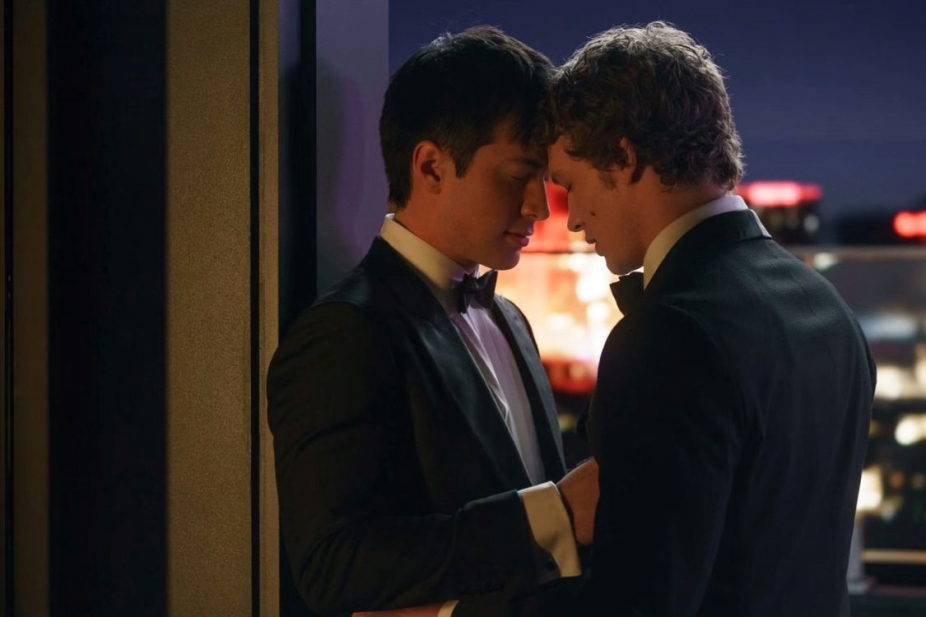
Actors Hudson Williams and Connor Storrie play hockey rivals Shane Hollander and Ilya Rozanov
in the hit streaming show Heated Rivalry. (BELLMEDIA/University of Windsor)
From social media to the Golden Globes, the spicy new TV show Heated Rivalry seems to be everywhere.
The Canadian-made romance, directed by Jacob Tierney and based on the book series by Rachel Reid, centres around fictional gay and bisexual professional hockey players navigating their on-ice careers and personal lives.
The show has become a cultural phenomenon, receiving wide-scale attention not just for its steamier scenes but its positive representation of queer characters.
“I think it's a representation of queer joy, which is not always included in the media,” says Dr. Dana Ménard regarding the show’s sudden popularity.
Ménard, a professor of psychology, studies sex, sexuality, gender identity and sexuality in media.
“At the end of the day, it's a love story, and there really hasn't been enough coverage of that type of narrative.”
In collaboration with the Windsor Rainbow Sports Club, Ménard and Human Kinetics professor Dr. Sarah Woodruff, along with their students, have studied queer participation in sport, in both general and queer-specific sports clubs.
“There is some anecdotal evidence that queer participation is on the upswing in sports and that there are more and more clubs that are dedicated to queer participants,” explains Ménard. “I think there's a few different areas that could be intersecting to generate interest in the show.”
Supported by the Social Sciences and Humanities Research Council and WE-SPARK Health Institute, Ménard and Woodruff’s research involved interviewing 2SLGBTQIA+ sports participants about their experiences in part to understand how general sports clubs and queer-specific clubs may differ.
“It depends on the sport and the locker room culture,” Woodruff says regarding factors influencing whether athletes feel comfortable coming out.
“There are some sports where athletes feel more comfortable about being themselves. I think the culture of some sports, in particular men’s hockey, does not allow for gay individuals to be out. There’s still a lot of teasing, hazing and derogatory comments in locker rooms that they just don’t feel comfortable coming out.”
“I think that having representation is fantastic,” says Woodruff, “and shows like this really bring these ideas to the forefront.”
The positive impact of Heated Rivalry goes beyond its representation of queer athletes, according to Ménard. She was struck by the way that consent and safer sex practices are depicted positively in the show.
“There’s a lot I liked about it from the perspective of a sex researcher,” she says.
“There are condoms shown on screen, and it’s not ‘oh man, we have to use condoms.’ It’s a very positive representation.”
Ménard also pointed out the ways in which one of the main characters seeks consent throughout his sexual encounters without killing the mood.
“There’s experimental research and evidence that depicting consent and condom use can impact people’s intentions going forward and in their sexual behaviours,” she explains.
“It's well-established that these representations make a difference. It warmed my heart to see it, especially in the context of a gay relationship. It's not just straight sex represented but also for 2SLGBTQ youth who are watching.”
Despite all the positive depictions in the show, Ménard says there is still work to be done shifting the culture of real-life professional sport to make it more welcoming for queer players.
“I do wonder how much a single person or a few early cases of professional athletes coming out can start to shift the culture,” she says.
“Whoever takes that first step probably is well aware of what they could expect. In the course of preparing for this project, I found a paper that was about reactions to a referee coming out as trans. That's not even a player, and yet, they ended up being a lightning rod for controversy.”
Woodruff echoes this regarding whether we might expect a public on-ice coming out in the NHL.
“I don't see that happening in real life," she says. "At celebrations, championship games, gold medal games, we see family come out on the ice. Wouldn't it be wonderful if somebody could have their partner or their partner and their children come out and celebrate just the same?”
Ménard cites the potential backlash as a barrier for pro men’s athletes.
“It’d be huge for representation and for young gay athletes,” she says. “It could start to shift the tone in the conversation, but I could understand on an individual level why somebody might hesitate to put themselves, their partners, their family through that scrutiny.”
“It's very sad in the year 2026 that it’s still a realistic concern.”
Still, Ménard says that media like Heated Rivalry can be helpful, especially in the current cultural moment with 2SLGBTQIA+ rights under attack.
“I think media like this and our research is particularly important in in the face of the current political climate where 2SLGBTQ people are being made to feel unwelcome by policies and discourse all over the world,” she explains.
“I appreciate everybody involved in creating this media putting out stories of this type as legislation is being advanced to keep trans people out of sports, and the U.S. seems hell-bent on dismantling every possible protection for those groups.”
“I think resistance comes in many forms,” she continues.
“Sometimes it's marching in the streets and sometimes it's a queer hockey show, and I think that's important right now.”
By Kate Hargreaves
Courtesy: https://www.uwindsor.ca/news/2026-01-14/getting-heated-profs-talk-queer-representation-sport-and-media